The relentless rain yesterday didn't stop and the heavy dark clouds overhead weren't exactly cheery. It was one of those days that the lights are on all day and you stay resolutely indoors if you can.
![]() |
![]() |
March is usually the month when I'm attacked in earnest by the annual bouts of feverishness, hope and joy of sowing seeds and growing food again for my family.
With recent snow, rain, and very high winds, I'm holding off being too carried away for now though. Instead, I've been spending a couple or so cosy afternoons and evenings on the sofa reading Rekha Mistry's first book "Rekha's Kitchen Garden" published by DK Books.
I've followed Rekha's gardening journey for quite a while now on social media. I've read some of her articles in garden magazines, watched her on BBC Gardeners World too, so know from experience what good gardening advice she can give after 30 years of growing food for her own family.
So what else can her book offer? Quite a lot as it turns out, whether you are a novice gardener or more experienced, and it has ticked so many boxes for me.
Rekha grows organically (hurrah!) and has plenty of tips for how to plan your plot or patch of garden for bumper crops. She's a great believer in growing what you like to eat, and grows 40 different types of fruit and vegetables on her own allotment.
Some kitchen garden guides merely tell you when to sow seeds, when to plant out and roughly when to harvest. Rekha goes quite a few steps further, holding your hand as the season goes along, so you know exactly when to do what and why you should.
Having said that, nothing is set in stone, this advice from one gardener to another is very engaging, readable and practical. For example, when growing purple sprouting broccoli (such a favourite of mine) Rekha writes
"Purple sprouting broccoli is a laid back plant , and so I take a leaf out of its book (pardon the pun) and ignore the recommended times of March and April. There's no point in rushing to get these seeds sown when there are so many seed trays taking up space in my greenhouse and cold frame. I much prefer to wait until early May, when most of my seedlings have moved on. I'll sow a tiny pinch (not more than 7or 8) of these in a 7 cm pot, sieve over a light covering of compost. After watering, I place the pot in the cold frame because the greenhouse is too warm and small containers can run dry within days."
Such good advice, which I'd not thought of before but which I'll certainly be following this year. There's so many more tips to encourage any gardener to go ahead and grow anything from fennel to french beans, spinach to strawberries, and to save your own seed and get plants for free.
This is very much a personal guide from Rekha, of what works and why for her, but deserves a much wider audience to benefit from all her experience. I only wish this book had been published when I started my own seasonal growing journey.
I was sent this book for review.
"Rekha's Kitchen Garden " by Rekha Mistry is published by DK Books and costs 18.99
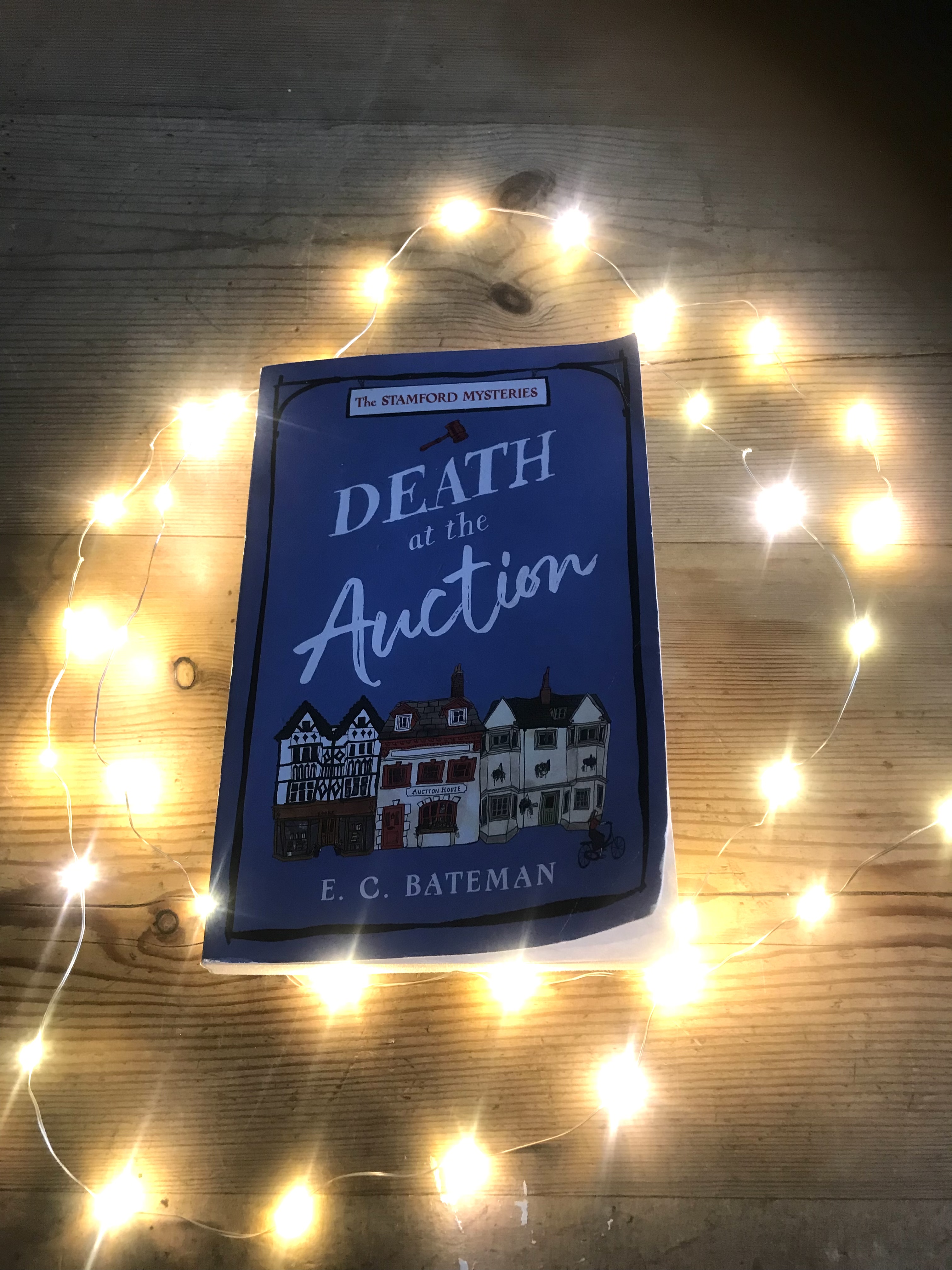
As an avid cosy crime fan, I was on full alert when I first heard about this first in a new crime series called the Stamford Mysteries.
The fact that it's set in the beautiful Lincolnshire town of Stamford and involves the world of antiques and auctions, is an added bonus.
As the book opens, it's safe to say that Felicia Grant is having a hell of a day. She and her twelve year old son Algernon have to hurry back to her home town of Stamford where her father has had an accident. What's more, there's no one to run the Saturday auction at the family firm apart from her, and there's also the small matter of someone who is found dead in the wardrobe she is auctioning.
So, an intriguing start to a mystery, where everyone could be a suspect including feisty Felicia and her ex husband Dexter, who has also surprisingly turned up in Stamford. With a detective sergeant who is trying his best to solve the murder despite the best efforts of a new, belligerent boss, a likeable but chaotic Mayor who also wants to get involved, and a rather large list of characters, you can't help become engaged with what's happening
Aspiring authors are often told to write about what they know. EC Bateman writes knowledgeably and entertainingly about auctions and antiques, - she's married to an auctioneer(who happens to run the family auction house in Stamford) and is an expert on antique jewelry.
Her descriptions of Stamford itself are like love letters to the town . Vivid scenes of the water meadows, the George Inn, the stunning Georgian architecture and mediaeval churches as well as the real atmosphere of the town are beautifully captured.
She also knows how to rack up the tension too, between the characters themselves as the body count rises and the mystery widens...who can trust who? Her plotting skills and twists also ensure an enjoyable read as Felicia and Detective Sergeant Pettifer find themselves forming an unlikely alliance to unmask the murderer.
There's humour in the novel too, with amusing digs at the telly tarts of the antiques business. I also enjoyed them the ascerbic dialogue between Felicia and her ex-husband with a hint of will they or won't they get back together. This made me smile and the all-seeing eye of their rather solemn son is deftly drawn.
No, I didn't guess who the murderer was but I wasn't disappointed, and E.C Bateman has really set the scene for more mysteries in Stamford which I'm really looking forward to reading . The next novel will be published next year, but in the meantime, guess where I'm going to as soon as possible? My next visit to Stamford is quite overdue and who knows, I may attend an auction too...
Death at the Auction is published by One More Chapter and costs £8.99
Stamford 2016
.
A filthy, soggy morning and rain has stopped me from getting some gardening done.
Instead, I am holed up in my greenhouse listening to the spitting of rain on the window panes, with my nose in Philip Clayton’s new book “A plant for every day of the year".
I’ve been dipping in and re-reading this book for the last week, and it's so much more than a dry, extended list of 365 plants divided into seasonal sections with the odd photograph thrown in for good measure.
Philip, a writer and former Deputy Editor of The Garden magazine from the RHS has grown and photographed every one of the plants featured in his own 130 x 25 ft garden. He really knows how each performs throughout the year, and advises on how to get the best out of them as well as mentioning their individual foibles and providing a fact file on each of them.
Unlike most books, I didn't start at the very beginning. I went straight into the chapter covering plants right now at their peak in mid Autumn and found a Decaisnea fargesii .Philip says it is perfect for Halloween and describes as having
“bizarre looking fruit which gives the plant its more grisly common name “dead mans fingers”. Each fruit is about the shape, size, and bruised blue colour of a detached human finger. It gets worse: if you touch them, they are cold with a soft flesh-like texture. Best to put such thoughts out of your mind and enjoy them as blue seed pods hanging amid the butter-yellow tints the leaves acquire."
Now, this is the sort of engaging description I like when reading about a plant, and there are plenty of them throughout the book.
On the same page, I'm seduced by a photograph of a beautiful Euonymus Alactus "Compactus" in all its glory, and once again I love the accompanying vivid description.
Mind you, after finding so many specimens in the book which would be wonderful in my garden, I will need restraining too. I “may” be tempted to buy quite a few of them ( and yes, I’m being deliberately vague about the exact number)
The plant selection here covers some more unusual ones which you won't find everywhere and may have to be hunted down. There are also plenty of more well-known ones, that remind you of some you’ve seen on garden visits. There’s no plant snobbery here, just a knowledgable, love of plants which he hopes gardeners of all levels will enjoy.
According to Philip Clayton " Thoughtfully planted, a garden will add new delights every day, regardless of the season."
With this book, there's an absolute feast of 365 delicious planting possibilities for both all-year-round colour and interest in any garden, whatever its size. I just wish there were a few photographs of Philip’s garden which show how he has curated this collection of plants, and so admire the overall effect
One word of warning about lending this book to friends…. You just might not get it back.
"A plant for every day of the year" by Philip Clayton, is published by DK Books and costs £20.
I was sent a copy to review.
National Apple Day has been celebrated here in the UK since 1990, and I'm only too happy to join in the celebrations for such a wonderful fruit.
I don't know about you, but I couldn't manage without apples in my diet. They're not only scientifically proven to be good for you (yes there's truth in the old saying "An apple a day keeps the doctor away), but growing them is good for all of us too .
According to Common Ground, the organisation which created this day in our calendar, it's important to recognize the importance of orchards to our landscape in the sheer diversity of our local varieties of apples and in our culture.
As a child, my mother and father had a mini orchard of apple and pear trees in their suburban garden and I have vivid memories of all the apple puddings we polished off over the years.
These days I have only one apple tree in my garden, which is rather lax about when it is going to fruit. I don't know what variety it is, but it's just sweet enough to pick off the tree and crunch away, but is also delicious when baked in cakes and puddings.
Our village apple tree fruited before mine, so at the beginning of September my two year old grandaughter and I went to collect our first locally grown apples of the season.![]() |
| Apple picking |
My ideas about gardening and the food we were eating changed when we had small children. One of my neighbours' garage held everything to kill things - weeds, ants, rodents, you name it, there was some toxic product to keep the garden pristine and repel all invaders.
That wasn't going to happen under my watch in our small garden, and I began reading about growing organically, which I've done ever since.
So, a few weeks ago, I was delighted to be at Garden Organic, near Coventry for a Garden Media Guild visit.
This is the home of the UK charity formerly known as the HenryDoubleday Research Association, which encourages organic gardening and growing food in a healthy and sustainable way, carries out scientific research into the best ways of doing so, and preserves heirloom seeds for posterity.
The organic show gardens that we see now were only created over two years ago, designed around a beautiful glasshouse and framed prettily by cosmos and verbena bonariensis. Our guide is the wonderfully enthusiastic Head Gardener Emma O'Neill.