SNV30239

SNV30239

Blogging about

I love blogging about... books

Monday, 5 December 2022

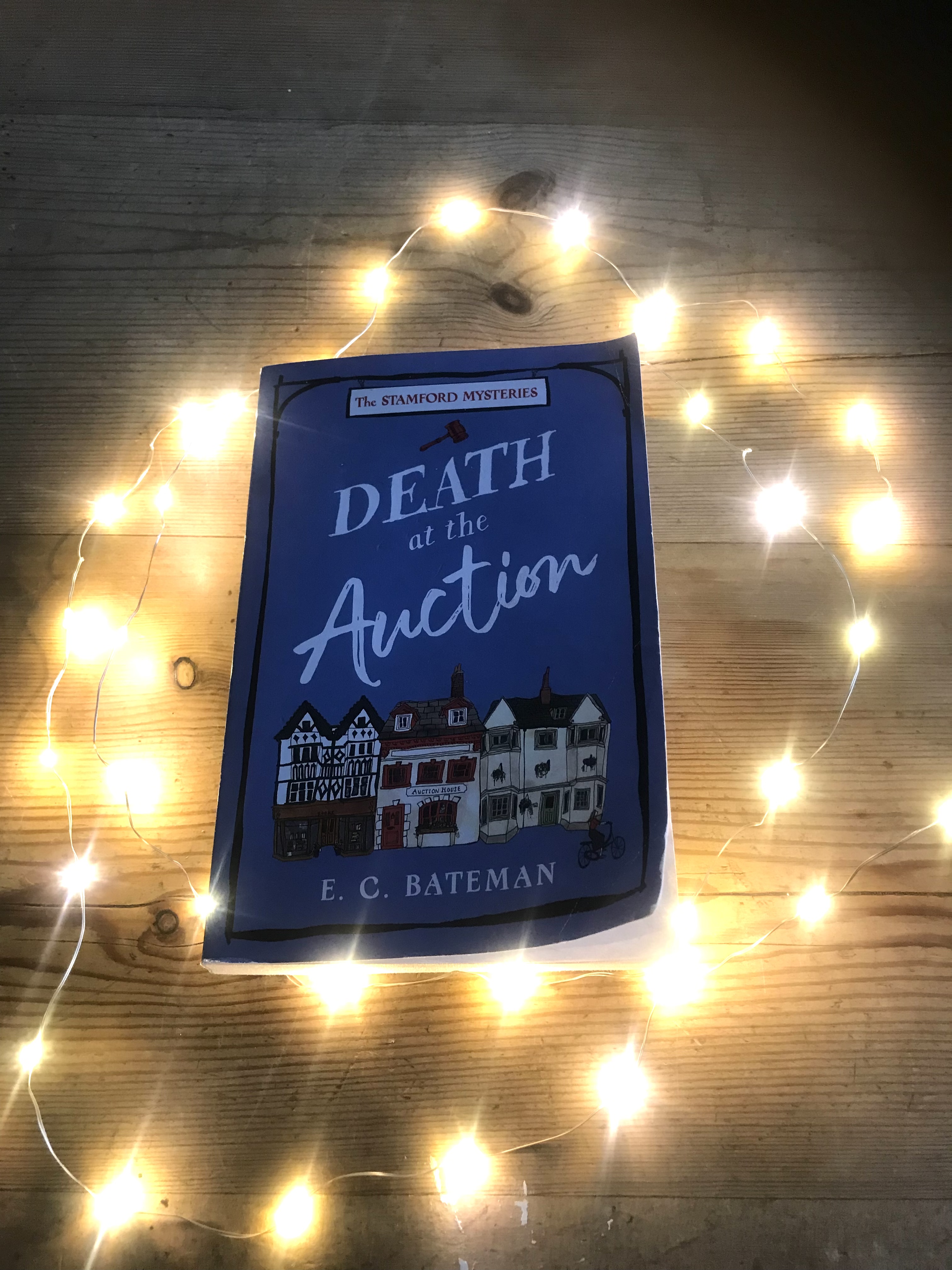
Book review of ‘Death at the auction’ by E.C. Bateman

As an avid cosy crime fan, I was on full alert when I first heard about this first in a new crime series  called the Stamford Mysteries.

The fact that it's set in the beautiful Lincolnshire town of Stamford and involves the world of antiques and auctions, is an added bonus.                                                                                                                                                                                                                                                                                                                                                                                                                                                                                                                                                                                                                                                                                                                                                                           


As the book opens, it's safe to say that Felicia Grant is having a hell of a day.  She and her twelve year old son Algernon have to hurry back to her home town of Stamford where her father has had an accident. What's more, there's no one to run the Saturday auction at the family firm apart from her, and there's also the small matter of someone who is found dead in the wardrobe she is auctioning.

So, an intriguing start to a mystery, where everyone could be a suspect including feisty Felicia and her ex husband Dexter, who has also surprisingly turned up in Stamford. With a detective sergeant who is trying his best to solve the murder despite the best efforts of a new, belligerent boss, a  likeable but chaotic Mayor who also wants to get involved, and a rather large list of characters, you can't help become engaged with what's happening 

Aspiring authors are often told to write about what they know. EC Bateman writes knowledgeably and entertainingly about auctions and antiques, - she's married to an auctioneer(who happens to run the family auction house in Stamford)  and is an expert on antique jewelry. 

Her descriptions of Stamford itself are like love letters to the town . Vivid scenes of the water meadows, the George Inn, the stunning Georgian architecture and mediaeval churches as well as the real atmosphere of the town are beautifully captured. 

She also knows how to rack up the tension too, between the characters themselves as the body count rises and the mystery widens...who can trust who? Her plotting skills and twists also ensure an enjoyable read as Felicia and Detective Sergeant Pettifer find themselves forming an unlikely alliance to unmask the murderer.

There's humour in the novel too,  with amusing digs at the telly tarts of the antiques business. I also enjoyed them the ascerbic dialogue between Felicia and her ex-husband with a hint of will they or won't they get back together. This made me smile and the all-seeing eye of their rather solemn son is deftly drawn. 

No, I didn't guess who the murderer was but I wasn't disappointed, and E.C Bateman has really set the scene for more mysteries in Stamford which I'm really looking forward to reading . The next novel will be published next year, but in the meantime, guess where I'm going to as soon as possible? My next visit to Stamford is quite overdue and who knows, I may attend an auction too...


Death at the Auction is published by One More Chapter and costs £8.99

Stamford  2016


.                                                                                                                                                                                                                                                                                                                                                                                                                                                                                                                                                                                                                                                                                                                                                                                 


Saturday, 12 November 2022

The Gardener's Almanac by Alan Titchmarsh - a book review

There's something about an almanac that I find quite comforting. In an uncertain world, especially at the beginning of a new year, there are certain constants in an almanac. There is advanced information on what time sunrise and sunset will occur, the times of the tides, should you be going to, or living by the sea. Anniversaries, planetary activities, and all sorts of other snippets and facts in a variety of subjects are there in bite-size pieces to inform and entertain.

That's why I was pleased to receive a copy of The Gardener's Alamanac by Alan Titchmarsh in the post to review, and for the past week or so, I've been going to bed with Alan's book and rationing myself to a chapter or so per night. 


This is comfort reading, to be savoured, even if you may be au fait with some of the topics featured.

Yes, each month features weather information, lists of flowers and vegetables to eat or store, as well as observations on a flower, a tree, a bird of the month, plus feast days. If you are a Scot though, you might take umbrage at the rather unfortunate typo in the first chapter which declares that Burns Night is celebrated on the 5th January rather than the 25th.. 

That one niggle aside, and moving swiftly on, Alan's choice of the tree of the month for February is Witch hazel - just one example of why I find his writing so engaging.
"The witch hazel hamamelis x intermedia has aspirations to be a tree, but in most gardens, it's a large shuttlecocked-shaped shrub. The fact that it flowers on bare branches makes it an exciting plant to grow. The flowers are large spiders consisting of a cluster of narrow, strap-shaped petals which may be rich crimson-"Livia", or yellow in what I think is the best variety - Pallida", quite simply because on a dingy, grey day when the darker varieties merge into the mist, it is more readily visible.
The flowers are scented of citrus and if the weather is too cold to detect fragrance, exhale on the blooms through your mouth and then inhale through your nose. Unless you have been heavy on the garlic the night before, the warmth of your breath will relieve the fragrance."

A lovely description, which makes me giggle too. Not only do I now want a couple of witch hazels in my garden, I also have visions of a rather hungover and garlic breathing Mr Titchmarsh propped up against a witch hazel and trying to inhale with gusto.

A list of appropriate advice on gardening do's and don'ts is accompanied by Alan's personal suggestions of music and books to enjoy each month. Some pieces I know, but in June, he recommends  "The Banks of Green Willow" composed by George Butterworth who died during the First World War. It really is a beautiful piece of music that I've not heard before, so am rather thrilled to make its acquaintance and am following other recommendations which are featured in each chapter.

Alan also highlights a famous gardener for each month and during his long and varied career, he's met and has been friends with so many. So, I like his personal anecdotes about them and personally am so pleased he included David Austin, the rosarian, who I managed to meet just before he died.

There is a quote at the beginning of each chapter of the book, and so aptly Alan quotes his friend Christopher Lloyd who was talking one day about November,
"The great thing about the garden in November is that no one expects anything of it."
How very true!

I also like Alan's suggestions for a garden to visit each month when it is at its best...and he has even illustrated the book. How on earth does he find the time?


After all, he’s written novels, countless gardening books, and even three memoirs in addition to the TV programmes he presents so well.

Throughout the book, Alan's chatty style distills his years of gardening experience and know how in a very accessible way to both those at the beginning of their gardening journeys, and to others along the way who fancy some inspiration.  

This almanac is perfect for bedtime and fireside reading during the long winter nights and an ideal Christmas present which will make you long for the gardening year ahead. 

The Gardener"s Almanac. A Treasury of Wisdom and Inspiration throughout the Year" by Alan Titchmarsh is published by Hodder and Stoughton and costs 14.99.


Wednesday, 26 October 2022

"A plant for every day of the year" by Philip Clayton - a book review


A filthy, soggy morning and rain has stopped me from getting some gardening done.


Instead, I am holed up in my greenhouse listening to the spitting of rain on the window panes, with my nose in Philip Clayton’s new book “A plant for every day of the year".


I’ve been dipping in and re-reading this book for the last week, and it's so much more than a dry, extended list of 365 plants divided into seasonal sections with the odd photograph thrown in for good measure.

Philip, a writer and former Deputy Editor of The Garden magazine from the RHS has grown and photographed every one of the plants featured in his own 130 x 25 ft garden. He really knows how each performs throughout the year, and advises on how to get the best out of them as well as mentioning their individual foibles and providing a fact file on each of them.


Unlike most books, I didn't start at the very beginning. I went straight into the chapter covering plants right now at their peak in mid Autumn and found a Decaisnea fargesii .Philip says it is perfect for Halloween and describes as having

“bizarre looking fruit which gives the plant its more grisly common name “dead mans fingers”. Each fruit is about the shape, size, and bruised blue colour of a detached human finger. It gets worse: if you touch them, they are cold with a soft flesh-like texture. Best to put such thoughts out of your mind and enjoy them as blue seed pods hanging amid the butter-yellow tints the leaves acquire."


Now, this is the sort of engaging description I like when reading about a plant, and there are plenty of them throughout the book.

On the same page, I'm seduced by a photograph of a beautiful Euonymus Alactus "Compactus" in all its glory, and once again I love the accompanying vivid description.


There's also a ClematisTerniflora" I rather like the look of with frothy white flowers and a sweet almond scent, which I haven't come across before, but apparently, it may need restraint. Don't we all at times?


Mind you, after finding so many specimens in the book which would be wonderful in my garden, I will need restraining too. I “may” be tempted to buy quite a few of them ( and yes, I’m being deliberately vague about the exact number)


The plant selection here covers some more unusual ones which you won't find everywhere and may have to be hunted down. There are also plenty of more well-known ones, that remind you of some you’ve seen on garden visits. There’s no plant snobbery here, just a knowledgable, love of plants which he hopes gardeners of all levels will enjoy.


According to Philip Clayton " Thoughtfully planted, a garden will add new delights every day, regardless of the season." 


With this book, there's an absolute feast of 365 delicious planting possibilities for both all-year-round colour and interest in any garden, whatever its size. I just wish there were a few photographs of Philip’s garden which show how he has curated this collection of plants, and so admire the overall effect


One word of warning about lending this book to friends…. You just might not get it back.


"A plant for every day of the year" by Philip Clayton, is published by DK Books and costs £20.


I was sent a copy to review.

Friday, 21 October 2022

National Apple Day

National Apple Day has been celebrated here in the UK since 1990, and I'm only too happy to join in the celebrations for such a wonderful fruit.

I don't know about you, but I couldn't manage without apples in my diet. They're not only scientifically proven to be good for you (yes there's truth in the old saying "An apple a day keeps the doctor away), but growing them is good for all of us too .

According to Common Ground, the organisation which created this day in our calendar, it's important to recognize the importance of orchards to our landscape in the sheer diversity of our local varieties of apples and in our culture.

 As a child, my mother and father had a mini orchard of apple and pear trees in their suburban garden and I have vivid memories of all the apple puddings we polished off over the years.

These days I have only one apple tree in my garden, which is rather lax about when it is going to fruit. I don't know what variety it is, but it's just sweet enough to pick off the tree and crunch away, but is also delicious when baked in cakes and puddings.

Our village apple tree fruited before mine, so at the beginning of September my two year old  grandaughter and I went to collect our first locally grown apples of the season. 

Apple picking 

For the last month though we've been picking and eating our own apples


I've prepared pounds of apples in the freezer ready for pie, tarts, and crumbles through the winter, but today, on a rainy Apple Day, I've collected the last lot off the tree and some windfalls. They will be needed.
 
Earlier this week,  Angie came around for supper. She's new to the village and is staying with our next-door neighbour until she can go home to Ukraine. We thoroughly enjoyed her company and she absolutely loved the apple crumble I made for pudding. I can't ever remember a time in my life without a crumble, but I suspect she won't forget her first one. One helping was followed by two more and she loved the tartness of the apples combined with the sweetness of the topping. 

 So do we, so I suspect it will be apple crumble ago go for Angie and us from now on, until the apples run out that is.....

Happy Apple Day to you all.


Wednesday, 21 September 2022

A day at Garden Organic and preserving seeds for the future

My ideas about gardening and the food we were eating changed when we had small children. One of my neighbours' garage held everything to kill things - weeds, ants, rodents, you name it, there was some toxic product to keep the garden pristine and repel all invaders. 

That wasn't going to happen under my watch in our small garden, and I began reading about growing organically, which I've done ever since. 

So, a few weeks ago, I was delighted to be at Garden Organic, near Coventry for a Garden Media Guild visit.

This is the home of the UK charity formerly known as the HenryDoubleday Research Association,  which encourages organic gardening and growing food in a healthy and sustainable way, carries out scientific research into the best ways of doing so, and preserves heirloom seeds for posterity.

The organic show gardens that we see now were only created over two years ago, designed around a beautiful glasshouse and framed prettily by cosmos and verbena bonariensis. Our guide is the wonderfully enthusiastic Head Gardener Emma O'Neill.

Inside, tomatoes, chillies, aubergines, melons and other heat-loving vegetables are grown in pots.  

Outside, the glasshouse is surrounded by four beds, one a perennial vegetable bed which includes skirret. This is new to me, but apparently, it dates back to Tudor times and its flavour is somewhere between a potato and a parsnip.
One bed is trialling the no dig method, and another features legumes, with heavy cropping beans climbing over archways.


 Beans are one of my favourite things to grow, so I made a beeline for them and was intrigued by one variety of runner bean "Slovenian White" Such delicate white flowers, so vigorous too, and when I saw some of the actual beans, they're large, bright white, and used primarily as a dried bean for soups and stews.


As we walk around, Emma is a mine of information and is very honest too, telling us how she's been having problems with the brassicas due to the heat, what plants have irritated her and why. This is the way to learn about growing plants, to hear of the failures as well as the successes,because it can be all too easy to be despondent at home when something goes wrong,   As Emma says, you can always try again, using a different approach, or use the advice pages on the Garden Organic website. 

Emma is proud of the ponds which have been established in the last two years, attracting all sorts of pollinators and the bug hotels around have attracted both bugs and children who are fascinated by them. After all, you are never too young to learn about organic gardening.


As you enter the polytunnel, there's the addictive scent of strawberries, so intense I want to snatch handfuls of the juicy fruits to eat, but I resist the urge and just admire them, as well as the very well-behaved tomatoes.


Organic gardening isn't just about growing food to eat of course and Emma O Neill loves her ornamentals too. 


After a quick lunch, (we all brought our own) we were off to learn more about the work of the Heritage Seed Library, which I found absolutely fascinating. Catrina Fenton is Head of the Library, and she's passionate about her work and why it is so important.

Apparently, we've lost thousands of varieties of traditional varieties of vegetables in the last fifty years or so. Catrina explains the introduction of intensive farming and EU rules introduced in the 1970s, meant the trade of seeds that had not been through an expensive registration process was restricted, which led to the extinction of heritage varieties.

That's where Lawrence Hills, the Founder of the Library stepped in. He realised that these old varieties needed to be protected, and since then, seeds of all sorts have been collected, sent or donated by growers who treasure the diverse range of varieties.

Each year, new ones arrive, and they are all trialled in  the grounds at Garden Organic, in open ground,  polytunnels and glasshouses.

Firstly we went into the polytunnels, one of which was bursting at the seams with what looked like tall  triffids, they were so lush and energetic, but they were Shropshire blackpods, an heirloom variety of runner bean grown by the same famiy for at least 100 years, plus Mr Wong's Shark Fin melon.

In one of the glasshouses, plants were drying out ...such as this Rousham Park Hero variety of onion, which was bred in the 19th century in Oxfordshire.


Meanwhile in the seed cleaning room indoors, Lucy the Seed Officer, oversees all the thousands of  harvested seeds  that arrive in here, including 3 to 4,000 tomatoes which come through the door. There's a winnowing machine, tomato seeds 

The results are kept in cold storage, in a room which houses thousands and thousands of treasures - heritage seeds of tomatoes, beans, peas, cauliflowers, carrots, squashes, you name it, filled with seeds which need to be protected.


Many have weird and wonderful names which delight, and every packet of seed tells a story of gardening  history, the people who grew them and a sense of place. These seeds can come a local grower, or from Europe and further afield, or from people who have come to live here but brought a taste of home with them. For example a seed search was conducted by Garden Organic back in 2012 across allotments in the the Midlands, to find seed originated from India. Again, these are an important genetic resource maintaining heirloom varieties. 

Before the end of out visit, we sat undercover in the Demonstration Garden, and over a  chat, we made ourselves useful. Some of us, were podding dried beans with Fiona Taylor, the charismatic Chief Executive of Garden Organic...


and the rest of us, were packing broad beans into packets, ready to be sent out to members of the Heritage Seed library early next year. Members of Garden Organic can join the Heritage Seed Library for an extra £18 and select six packets of seed from over 150 different types  of vegetables in a catalogue which plops throught the door in early December.


I drove home from the visit with my mind buzzing with visions of upping my own seed saving game, what to grow next year and planting methods and ideas which are so  relatable not just to my garden but so many others. 
There was also the sense of just how valuable Garden Organic is, in a world of unprecedented global, environmental change and challenges. 

The garden and Heritage Seed Library is open regularly to the public and pre- booked tours and workshops. Visitors are offered a guided tour and expert advice on organic gardening. Scheduled tour days are free for members and  cost £7.50 for non members.
Groups can also book a private tour  ...call 024 7630 3517 

More information can be found here  https://www.gardenorganic.org.uk/events


Tuesday, 30 August 2022

A day reviewing "The Secret Gardens of east anglia of South East England by Barbara Segall

 Surely visiting a garden is one of the most pleasurable of pastimes?

For me, it's the sense of anticipation as you arrive, wondering which vistas, planting schemes, and colour combinations will excite you. Happiness on the way home, stuffed with cake and usually with a car boot containing some new little treasures in plant pots.

Well, this Bank holiday weekend, I visited twenty glorious gardens in Surrey, Sussex, and Kent, all without leaving my own home and garden. It's all thanks to gardening and food writer Barbara Segall and her latest book"The Secret Gardens of the South East of Gardens of the South East. A private tour" which is published next month.


This follows her previous collaboration five years ago with photographer Marcus Harpur "The Secret Gardens of East Anglia, which I really enjoyed. My review of that book is here...

http://thinkingofthedays.blogspot.com/2017/12/days-before-christmas-gifts-for.html

 So I knew I would be in good hands as she introduces us to twenty very different gardens and their owners, this time photographed by Clive Boursnell.

The first garden in the book is a surprise, a small town garden in Whitstable, measuring a mere 45 feet by 14 feet, like so many Victorian houses. In 2010 when they moved in, it was a gravel garden with a membrane breaking up and impoverished soil, according to owners Paul and Phil.

Not now though, as they have embraced the fences, using them for height and structure, and are now packed with upwardly swarming plants in a riot of colours.

Donald and Charlotte live in a small house with a delightfully quirky 1.5-acre garden, in Beneden in Kent which through necessity and choice has been created on a shoestring budget. Recycling and getting most of the plants free, from cuttings or from seeds from their parent's gardens or elsewhere has been their mantra for years, plus growing lots of fruit and vegetables. For years too, Charlotte has been creating the most playful topiary animals from the yew hedges they planted, and the effect is stunning. 


So what about the other 18 gardens in the book?  Well, you're going to have to buy a copy to discover them for yourselves.

Quite a few of them have been inherited from previous generations. For example, the owners of Ramster Hall in Chiddingfold, Surrey are celebrating a century of curating the garden this year.

Doesn't the thought of inheriting a beautiful garden sound wonderful? Yes, it does, although that's hardly likely in my case. Nevertheless, with privilege and the urge to put your own mark on a garden, comes a responsibility - to enhance and restore it, of future-proofing, whilst being mindful of its past. This comes over quite strongly in the book how these owners have risen to the challenge.

To buy a house with a garden designed by Vita Sackville West or Gertrude Jekyll must be a privilege too, and Barbara has featured two of them, 

Barbara has woven the stories and history of these gardens and their previous owners with those of their current custodians with care and dexterity. I'm also pleased to see that the gardeners who work in them too are given their due and included in both the text and the photographs. 

Through her expert eyes, we are given a comprehensive overview of each garden but I like the way she hones in on specific plants, and features that others might miss. The devil is always in the detail.....

The gardens may be classed as secret, but some do open for private visits or as part of the inimitable National Gardens Scheme. 

I certainly plan to visit as many of them as I can when possible as they all look so inviting and beautiful. In the meantime, I've enjoyed quite a few happy hours poring over this guide to such an eclectic group of gardens, including one which even features a hornbeam church!

'Secret Gardens of the South East. A Private Tour'  by Barbara Segall and photographs by Clive Boursnall is published by Frances Lincoln on 20th September 2022.

NB I was sent this review copy by the publishers.


Wednesday, 3 August 2022

Days of picking raspberries differently with Sophie Kinsella

I've almost picked the last of the raspberries.


Each visit to the allotment to pick them has been different. At the beginning of the season, there were a couple of quick dashes to pick before heavy rain was about to fall. A case of throwing caution to the wind, and flinging as many ripe raspberries as I could into containers, then home, before getting soaked.

A few weeks ago, the sun was warm on my back as I made my way down the rows of raspberries canes, and picked leisurely. Treating myself at the end of each row to a handful of juicy berries,  lifting my face to the sun, I was thoroughly lost in the moment.

It reminded me of something, something I'd read years ago. A very funny Sophie Kinsella novel "The Undomestic Goddess" featuring a deliciously romantic romp


in the raspberry canes between the heroine Samantha and the rather gorgeous Nathaniel. 

Samantha is a hotshot overworked London lawyer who escapes to the countryside after she's blamed for a multi-million-pound error and Nathaniel is a gardener who teaches her that life in the slow lane can be more rewarding in more ways than one.  A few days later , I found the book in a bookcase upstairs and the raspberry picking scene.

"The raspberry canes are further down the garden, like rooms of green netting, with dry earthy floors and rows of raspberry canes As we enter there's no sound apart from buzzing insects and the flapping of a trapped bird, which Nathaniel shoos out.

We work  the first row wordlessly, intently, picking the fruit off the plants. By the end of the row, my mouth is tangy with the taste of them, my hands are scratched and aching, and I'm sweating all over. The heat seems more intense in this raspberry cage than anywhere else in the garden,

 We meet at the end of the row and Nathaniel looks at me a still second, sweat running down the side of his face.

"Hot work," he says. He puts his trug down and strips off his T-shirt.

"Yes."There's a still beat between us. Then, almost defiantly, I do the same. I'm standing there in my bra, inches from in, my skin pale and milky compared to his.

"Have we done enough?" I gesture at the trug,  but Nathaniel doesn't even glance down.

"Not yet."

Something about this expression makes me damp and prickly behind my knees. I meet his eyes and it's like we're playing truth or dare.

"I couldn't reach these ones." I point at a high cluster of fruit just out of reach.

"I'll help" He leans over me, skin against skin, and I feel his mouth on my earlobe as he picks the fruit. My entire body responds. I can't bear this, I need it to stop. And I need it not to stop."

Well, I'm going to stop there too as the attraction and tension among the raspberries continues rather well. I couldn't help thinking of that scene though,  during the heatwave when I went to the allotment to water the raspberries after doing some more picking. 

The heat, the sweating (mine). There the resemblance ended and I began to smile, then giggle, before crying with laughter. 

Romance was decidedly lacking. In the distance I could see Alan, in his eighties, back bent over digging, and then stopping to rub his back as he tried to get upright.  On the neighbouring allotment, Graham was huffing and puffing, not from any physical exertion I might add, he was too busy swearing at the same time. I don't blame him, thieves keep targeting our allotment site,  and I won't describe what he was going to do to them if found.

Truth can be so much more mundane than fiction.

Meanwhile, there are plenty of raspberries tucked away in the freezer, raspberry coulis too, and pounds of homemade raspberry and gin jam on my shelves.  


 All I need to do now is prune the raspberries, and  re-read Sophie Kinsella’s novel……