SNV30239

SNV30239

Blogging about

I love blogging about... books

Thursday, 18 May 2023

A day at the RHS Malvern Show 2023 and why you should visit next year


 It's that time of year when I feel rather giddy. After the long dark days of winter, and let's face it, quite a miserable spring so far, May and the months ahead are full of promise, opportunities, and excitement as the annual round of major garden fairs, festivals and open gardens begin. Each event has its own charm, depending on what time of the year it is held and where.

Going to my first show of the season last week was an absolute delight. There’s something about RHS Malvern Spring Festival that gladdens my heart.

Firstly, the setting is sublime, with the glorious Malvern Hills providing a stunning backdrop and the sheer size of the immaculate Three Counties Showground means there is plenty of space to wander around and more importantly with lots of seating to relax.


The Floral Marquee has a dominating position near the entrance, and you can see visitors debating whether to go in there first to see the 50 nurseries which are exhibiting in the 190 metre long marquee or plough on ahead to see the show gardens.

As it was early morning I marched resolutely onwards before the crowds came, to get a good look at the five show gardens as well as the feature gardens.

It was easy to see why the Bee Positive, Bee Kind , Bee Aware garden was awarded a gold medal by the judges.


Designed by Rock Ford and Katie Gentle for global charity, Bees for Development, the beehives take centre stage, as all around the planting is designed to attract and feed bees with vegetables, herbs and perennial flowers. I particularly liked the living roof of the kitchen,and the area below. In fact, I wanted to leap over the ropes and settle there for an hour, listening to the bees and admiring the layout of the garden. So many good ideas to take home here... 

The Greener Gloucestershire NHS Garden designed by Laura Ashton Phillips is also full of plants to attract wildlife but has been created as a calming environment for patients at the Gloucester Royal Hospital. A well deserved Silver Medal for Laura ….


The pretty, soothing palette of colours and a running stream appeal to the senses, there are wide pathways so the garden is completely accessible. It's an inviting space to connect with nature after being in the sterile world of a hospital, something which has been proven to lower stress levels and improve patient recovery rates.

Meanwhile, Jamie Langlands stole the show with his design for The Wildlife Trusts' "Wilder Spaces Garden” 

It features a pond, a creek, native wildflowers and a wide variety of habitats for wildlife and encouraging diversity. Mind you, it's also an inspiring and restful garden for humans...and this human loved it.

So did the judges here at RHS Malvern.  They awarded this garden a Gold Medal,, Best in  Show and the Best Construction for a garden .

I was there when the judges came over and presented Jamie and his team with the awards. After the smiles for the photographers, the guys had the longest of group hugs and the biggest grins on their faces.


Speaking briefly with Jamie afterwards, he couldn't contain his delight. "It's amazing. This is the type of garden that's more me, and I'm thrilled for my contractors who worked so hard in quite tough conditions. It's great that they have been given this award." 

A large, 25 metre dome which dominated the Show Gardens area was certainly a talking point. Going inside Leaf Tropicana was quite a revelation, leaving an oh so quintessentially English country festival and finding yourself in a tropical wonderland of heat, humidity and lush greenery.


The vision, the scale of the planting (3,000 plants), the height of the trees and being confronted by a huge waterfall  are breathtakingly successful. There's even a little bar to sit at and have a drink.

Chatting with designer Peter Dowle, who runs Leaf Creative, a plant nursery and garden design service in Gloucestershire,  I was surprised how relaxed he was after a build which took 14 men 12 days to construct.“So what happens to all these plants after the show” I asked Peter. Apparently every plant is recycled. Many are hired out for events and he pointed out one huge plant which has been on display 5 times at different events. 

So, these were the four gardens I very much enjoyed t, but every single garden here had  something to admire or an idea to squirrel away for future use.

Of course it's not just the gardens that visitors come to see at RHS Malvern. This year there seemed to be an increasing amount of talks and demonstrations by top florists,  garden experts and designers, cooks plus familiar faces from the telly, such as James Alexander Sinclair, Frances Tophill, Alan Titchmarsh, Adam Frost,,Mark Diacono, Greg Wallace et al.

It's lovely to take a pause for half an hour and listen to knowledgeable and amiable speakers, and they were very popular with visitors.

The retail offer at this spring festival is top notch too. Everything from clothes to garden antiques, thousands of plants in perfect condition, garden seating  parasols, plant pots , tools etc which you never knew you never needed were tempting so many. Artisan and local food and drinks  producers were selling well too indoors and with something new to taste or take home. 


As Thursday drew to a close, it was time to go and at last visit the Floral Marquee on the way out. With the crowds thinning out, there was space to see everything that the plant nurseries had to offer and time to talk to experts in their field of speciality. As suspected, I couldn't resist the lure of seeing plants at their peak and a tray of carnations and three stunning pots of tulips soon found themselves in the boot of my car.

As I made my way home happily, I realised two things: what an entertaining and motivational day it had been, and also that RHS Malvern has become my favourite festival.

RHS Malvern is being held next year from 9 - 12 May 2024.

Saturday, 1 April 2023

Foodie Friday with “Real Food Fast “ by Mary Berry


The relentless rain yesterday didn't stop and the heavy dark clouds overhead weren't exactly cheery. It was one of those days that the lights are on all day and you stay resolutely indoors if you can.

The sort of day when you feel the urge to bake. The thing was, I didn't really know what I fancied to make or eat. Time to sit down then with a hot drink, and rifle through my cookbooks for something to tempt and inspire. I didn't want to make a huge cake or something too fiddly, and I'd already made homemade biscuits and shortbread earlier in the week.

Luckily, Mary Berry came to the rescue.


This is a signed copy of her book which was published back in 2005, and given to me for my birthday that year by my lovely neighbour Sharon. Such a useful present, I've been cooking from it ever since.

There are lots of recipes that are speedy to make, or can be prepared well in advance if you have got friends or family coming around for drinks or a meal. Some are fancier than others, (quails eggs, prawn bloody marys anyone?) Some take longer but really, these are uncomplocated dishes which pass the taste test whatever the occasion.

There's other recipes though that are tried and trusted by me - for example the wonderful parmesan and pistachio nutters. Such easy,  delicious biscuits, and then a very moreish mango spiced dip and everyone always wants these recipes.

Starters, fish dishes,  vegetarian,and meat main courses and puddings are featured and there's some chicken dishes I've relied on in past years, and really fancy trying again. Being reminded of Five spice mango chicken again makes me vow I will make it again soon, as well as the mini suasages with mango chutney and sesame seeds which we all love. 

There's a chapter though, which has proved its worth time and time again, and that's Chapter 6, Tea for a crowd.

Mary Berry has opened up her garden for years in the summer in aid of the National Gardens Scheme charity, and so there's a wealth of teatime treats to make in large quantities. A variety of prepare ahead sandwiches, easy but tasty traybakes, cakes and what are called modestly(!) 
"The Very Best Scones"
Actually Mary is right. They are. Light, fluffy and fail-proof. Just the sort of thing when you catering for a crowd, or a school fete or a charity event 

And that's what I decided to make yesterday. Not for any of those reasons. Hot scones with cream and jam, to satisfy my urge to bake on such a dismal, dreary day but also something with the promise and taste of summer gardens and strawberry jam.

They really are a doddle to make - prep time is 10 minutes, cooking time is 10 minutes and makes 40.

The Very Best Scones
Ingredients
900g  2lbs self-raising flour
8 teaspoons baking powder
175 gm 6oz butter 
100g 40z caster sugar
4 eggs
500ml 18 floz milk

Method
Preheat oven to 220 deg C, Fan 200 deg C, Gas mk 7 and lightly grease 2 baking trays

1.Measure the flour and baking powder into a food processor( I used my Kitchen Aid stand mixer) Stir in the sugar.
2.Beat the eggs until blended and make up to agenerous 600ml (1 pint) with the milk. Put aside about  4tblspoons of the egg and milk in a cup for glazing the scones later. Pour the rest of the mixture to the dry ingredients until you have a soft dough, It’s far better to have it on the wet side ,sticking to your fingers as the scones will rise more.
3.Turn the dough out onto a lightly floured surface, and flatten it out to a thickness of about 1-2 cm . Use a 5cm (2in) . Gently push the remaining dough together, knead very lightly then gently push the remaining dough together, knead very lightly then re-roll and  cut out more scones as before.
4. Arrange the scones on the prepared baking trays and brush the tops with the reserved egg/milk . Bake in the preheated oven for about 10 to 15 minutes until the scones are well risen and golden. Coolon a wire rack, covered with a clean tea towel to keep them moist.
5.Serve as fresh as possible , cut in half and spread both halves with jam. Top with a good spoonful of thick cream. 


NB I made 20 scones (halved the recipe) and I used 284 ml of buttermilk instead of milk.

If you are cooking for a huge gang, Mary Berry recommends you will need about 1.3kg (3lbs) of jam and about 900ml (1 and half pints) of cream for 40 scones.


Menwhile, I have bookmarked a couple of recipes which I need to make again soon. 

That's the thing about Mary, her years  of experience mean that all her recipes work, I've never had a duff one which has gone wrong. Everything you need to know is carefully explained  and her huge repertoire of flavours and shortcuts in this book make it a winner.

Fast Real Food was published in 2005 by Headline Publishing.


Monday, 13 March 2023

Book Review: "Rekha's Kitchen Garden" by Rekha Mistry

March is usually the month when I'm attacked in earnest by the annual bouts of feverishness, hope and joy of sowing seeds and growing food again for my family.

With recent snow, rain, and very high winds, I'm holding off being too carried away for now though. Instead, I've been spending a couple or so cosy afternoons and evenings on the sofa reading Rekha Mistry's first book  "Rekha's Kitchen Garden" published by DK Books.

I've followed Rekha's gardening journey for quite a while now on social media. I've read some of her articles in garden magazines, watched her on BBC Gardeners World too, so know from experience what good gardening advice she can give after 30 years of growing food for her own family.

So what else can her book offer? Quite a lot as it turns out, whether you are a novice gardener or more experienced, and it has ticked so many boxes for me.

Rekha grows organically (hurrah!) and has plenty of tips for how to plan your plot or patch of garden for bumper crops. She's a great believer in growing what you like to eat, and grows 40 different types of fruit and vegetables on her own allotment.

Some kitchen garden guides merely tell you when to sow seeds, when to plant out and roughly when to harvest. Rekha goes quite a few steps further, holding your hand as the season goes along, so you know exactly when to do what and why you should. 

Having said that,  nothing is set in stone, this advice from one gardener to another is very engaging, readable and practical. For example, when growing purple sprouting broccoli (such a favourite of mine) Rekha writes 

"Purple sprouting broccoli is a laid back plant , and so I take a leaf out of its book (pardon the pun) and ignore the recommended times of March and April. There's no point in rushing to get these seeds sown when there are so many seed trays taking up space in my greenhouse and cold frame. I much prefer to wait until early May, when most of my seedlings have moved on. I'll sow a tiny pinch (not more than 7or 8) of these in a 7 cm pot, sieve over a light covering of compost. After watering, I place the pot in the cold frame because the greenhouse is too warm and small containers can run dry within days."

Such good advice, which I'd not thought of before but which I'll certainly be following this year. There's so many more tips to encourage any gardener to go ahead and grow anything from fennel to french beans, spinach to strawberries, and to save your own seed and get plants for free.

This is very much a personal guide from Rekha, of what works and why for her, but deserves a much wider audience to benefit from all her experience. I only wish this book had been published when I started my own seasonal growing journey. 

I was sent this book for review.

"Rekha's Kitchen Garden " by Rekha Mistry is published by DK Books and costs 18.99


Monday, 5 December 2022

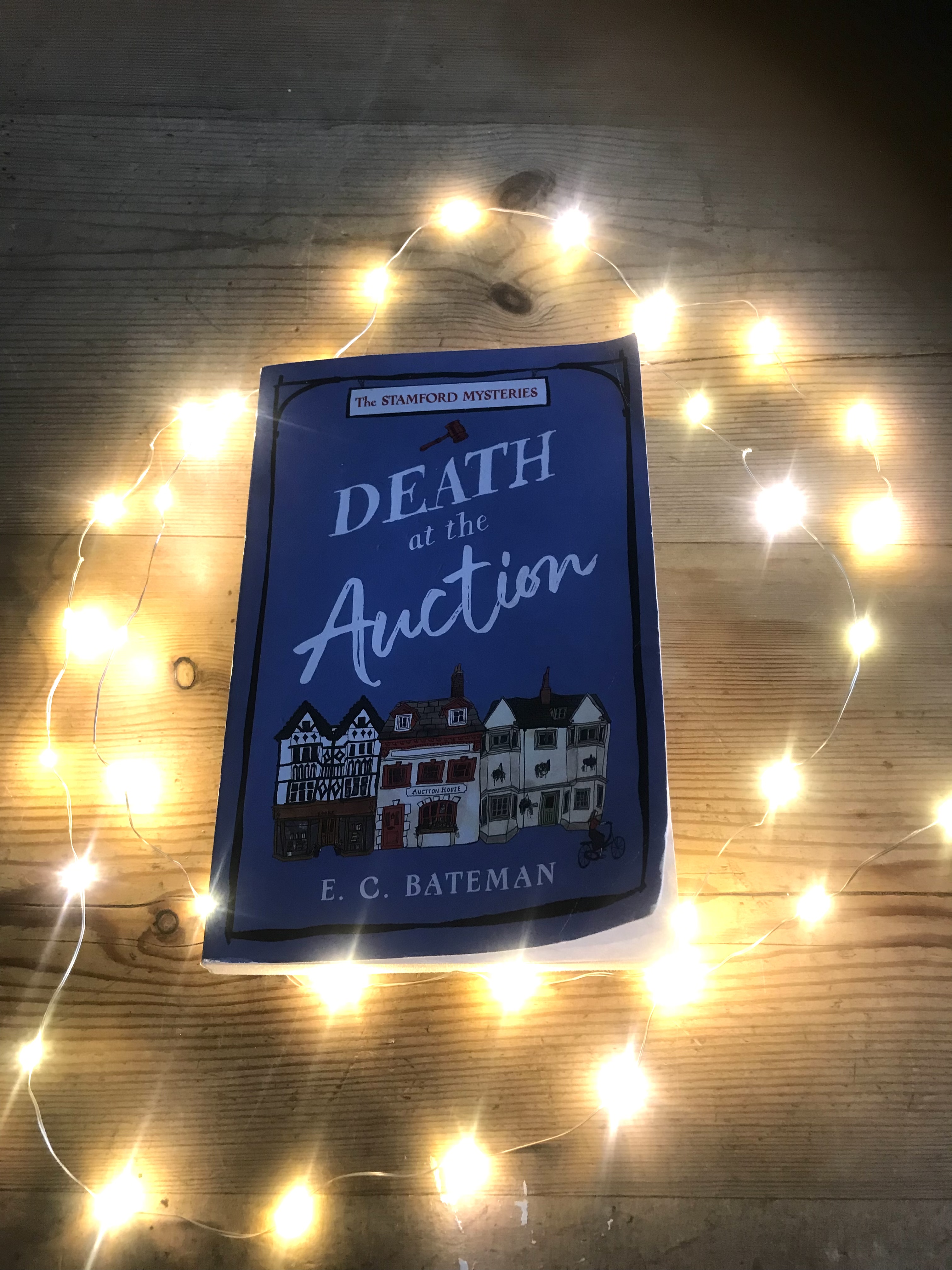
Book review of ‘Death at the auction’ by E.C. Bateman

As an avid cosy crime fan, I was on full alert when I first heard about this first in a new crime series  called the Stamford Mysteries.

The fact that it's set in the beautiful Lincolnshire town of Stamford and involves the world of antiques and auctions, is an added bonus.                                                                                                                                                                                                                                                                                                                                                                                                                                                                                                                                                                                                                                                                                                                                                                           


As the book opens, it's safe to say that Felicia Grant is having a hell of a day.  She and her twelve year old son Algernon have to hurry back to her home town of Stamford where her father has had an accident. What's more, there's no one to run the Saturday auction at the family firm apart from her, and there's also the small matter of someone who is found dead in the wardrobe she is auctioning.

So, an intriguing start to a mystery, where everyone could be a suspect including feisty Felicia and her ex husband Dexter, who has also surprisingly turned up in Stamford. With a detective sergeant who is trying his best to solve the murder despite the best efforts of a new, belligerent boss, a  likeable but chaotic Mayor who also wants to get involved, and a rather large list of characters, you can't help become engaged with what's happening 

Aspiring authors are often told to write about what they know. EC Bateman writes knowledgeably and entertainingly about auctions and antiques, - she's married to an auctioneer(who happens to run the family auction house in Stamford)  and is an expert on antique jewelry. 

Her descriptions of Stamford itself are like love letters to the town . Vivid scenes of the water meadows, the George Inn, the stunning Georgian architecture and mediaeval churches as well as the real atmosphere of the town are beautifully captured. 

She also knows how to rack up the tension too, between the characters themselves as the body count rises and the mystery widens...who can trust who? Her plotting skills and twists also ensure an enjoyable read as Felicia and Detective Sergeant Pettifer find themselves forming an unlikely alliance to unmask the murderer.

There's humour in the novel too,  with amusing digs at the telly tarts of the antiques business. I also enjoyed them the ascerbic dialogue between Felicia and her ex-husband with a hint of will they or won't they get back together. This made me smile and the all-seeing eye of their rather solemn son is deftly drawn. 

No, I didn't guess who the murderer was but I wasn't disappointed, and E.C Bateman has really set the scene for more mysteries in Stamford which I'm really looking forward to reading . The next novel will be published next year, but in the meantime, guess where I'm going to as soon as possible? My next visit to Stamford is quite overdue and who knows, I may attend an auction too...


Death at the Auction is published by One More Chapter and costs £8.99

Stamford  2016


.                                                                                                                                                                                                                                                                                                                                                                                                                                                                                                                                                                                                                                                                                                                                                                                 


Saturday, 12 November 2022

The Gardener's Almanac by Alan Titchmarsh - a book review

There's something about an almanac that I find quite comforting. In an uncertain world, especially at the beginning of a new year, there are certain constants in an almanac. There is advanced information on what time sunrise and sunset will occur, the times of the tides, should you be going to, or living by the sea. Anniversaries, planetary activities, and all sorts of other snippets and facts in a variety of subjects are there in bite-size pieces to inform and entertain.

That's why I was pleased to receive a copy of The Gardener's Alamanac by Alan Titchmarsh in the post to review, and for the past week or so, I've been going to bed with Alan's book and rationing myself to a chapter or so per night. 


This is comfort reading, to be savoured, even if you may be au fait with some of the topics featured.

Yes, each month features weather information, lists of flowers and vegetables to eat or store, as well as observations on a flower, a tree, a bird of the month, plus feast days. If you are a Scot though, you might take umbrage at the rather unfortunate typo in the first chapter which declares that Burns Night is celebrated on the 5th January rather than the 25th.. 

That one niggle aside, and moving swiftly on, Alan's choice of the tree of the month for February is Witch hazel - just one example of why I find his writing so engaging.
"The witch hazel hamamelis x intermedia has aspirations to be a tree, but in most gardens, it's a large shuttlecocked-shaped shrub. The fact that it flowers on bare branches makes it an exciting plant to grow. The flowers are large spiders consisting of a cluster of narrow, strap-shaped petals which may be rich crimson-"Livia", or yellow in what I think is the best variety - Pallida", quite simply because on a dingy, grey day when the darker varieties merge into the mist, it is more readily visible.
The flowers are scented of citrus and if the weather is too cold to detect fragrance, exhale on the blooms through your mouth and then inhale through your nose. Unless you have been heavy on the garlic the night before, the warmth of your breath will relieve the fragrance."

A lovely description, which makes me giggle too. Not only do I now want a couple of witch hazels in my garden, I also have visions of a rather hungover and garlic breathing Mr Titchmarsh propped up against a witch hazel and trying to inhale with gusto.

A list of appropriate advice on gardening do's and don'ts is accompanied by Alan's personal suggestions of music and books to enjoy each month. Some pieces I know, but in June, he recommends  "The Banks of Green Willow" composed by George Butterworth who died during the First World War. It really is a beautiful piece of music that I've not heard before, so am rather thrilled to make its acquaintance and am following other recommendations which are featured in each chapter.

Alan also highlights a famous gardener for each month and during his long and varied career, he's met and has been friends with so many. So, I like his personal anecdotes about them and personally am so pleased he included David Austin, the rosarian, who I managed to meet just before he died.

There is a quote at the beginning of each chapter of the book, and so aptly Alan quotes his friend Christopher Lloyd who was talking one day about November,
"The great thing about the garden in November is that no one expects anything of it."
How very true!

I also like Alan's suggestions for a garden to visit each month when it is at its best...and he has even illustrated the book. How on earth does he find the time?


After all, he’s written novels, countless gardening books, and even three memoirs in addition to the TV programmes he presents so well.

Throughout the book, Alan's chatty style distills his years of gardening experience and know how in a very accessible way to both those at the beginning of their gardening journeys, and to others along the way who fancy some inspiration.  

This almanac is perfect for bedtime and fireside reading during the long winter nights and an ideal Christmas present which will make you long for the gardening year ahead. 

The Gardener"s Almanac. A Treasury of Wisdom and Inspiration throughout the Year" by Alan Titchmarsh is published by Hodder and Stoughton and costs 14.99.


Wednesday, 26 October 2022

"A plant for every day of the year" by Philip Clayton - a book review


A filthy, soggy morning and rain has stopped me from getting some gardening done.


Instead, I am holed up in my greenhouse listening to the spitting of rain on the window panes, with my nose in Philip Clayton’s new book “A plant for every day of the year".


I’ve been dipping in and re-reading this book for the last week, and it's so much more than a dry, extended list of 365 plants divided into seasonal sections with the odd photograph thrown in for good measure.

Philip, a writer and former Deputy Editor of The Garden magazine from the RHS has grown and photographed every one of the plants featured in his own 130 x 25 ft garden. He really knows how each performs throughout the year, and advises on how to get the best out of them as well as mentioning their individual foibles and providing a fact file on each of them.


Unlike most books, I didn't start at the very beginning. I went straight into the chapter covering plants right now at their peak in mid Autumn and found a Decaisnea fargesii .Philip says it is perfect for Halloween and describes as having

“bizarre looking fruit which gives the plant its more grisly common name “dead mans fingers”. Each fruit is about the shape, size, and bruised blue colour of a detached human finger. It gets worse: if you touch them, they are cold with a soft flesh-like texture. Best to put such thoughts out of your mind and enjoy them as blue seed pods hanging amid the butter-yellow tints the leaves acquire."


Now, this is the sort of engaging description I like when reading about a plant, and there are plenty of them throughout the book.

On the same page, I'm seduced by a photograph of a beautiful Euonymus Alactus "Compactus" in all its glory, and once again I love the accompanying vivid description.


There's also a ClematisTerniflora" I rather like the look of with frothy white flowers and a sweet almond scent, which I haven't come across before, but apparently, it may need restraint. Don't we all at times?


Mind you, after finding so many specimens in the book which would be wonderful in my garden, I will need restraining too. I “may” be tempted to buy quite a few of them ( and yes, I’m being deliberately vague about the exact number)


The plant selection here covers some more unusual ones which you won't find everywhere and may have to be hunted down. There are also plenty of more well-known ones, that remind you of some you’ve seen on garden visits. There’s no plant snobbery here, just a knowledgable, love of plants which he hopes gardeners of all levels will enjoy.


According to Philip Clayton " Thoughtfully planted, a garden will add new delights every day, regardless of the season." 


With this book, there's an absolute feast of 365 delicious planting possibilities for both all-year-round colour and interest in any garden, whatever its size. I just wish there were a few photographs of Philip’s garden which show how he has curated this collection of plants, and so admire the overall effect


One word of warning about lending this book to friends…. You just might not get it back.


"A plant for every day of the year" by Philip Clayton, is published by DK Books and costs £20.


I was sent a copy to review.

Friday, 21 October 2022

National Apple Day

National Apple Day has been celebrated here in the UK since 1990, and I'm only too happy to join in the celebrations for such a wonderful fruit.

I don't know about you, but I couldn't manage without apples in my diet. They're not only scientifically proven to be good for you (yes there's truth in the old saying "An apple a day keeps the doctor away), but growing them is good for all of us too .

According to Common Ground, the organisation which created this day in our calendar, it's important to recognize the importance of orchards to our landscape in the sheer diversity of our local varieties of apples and in our culture.

 As a child, my mother and father had a mini orchard of apple and pear trees in their suburban garden and I have vivid memories of all the apple puddings we polished off over the years.

These days I have only one apple tree in my garden, which is rather lax about when it is going to fruit. I don't know what variety it is, but it's just sweet enough to pick off the tree and crunch away, but is also delicious when baked in cakes and puddings.

Our village apple tree fruited before mine, so at the beginning of September my two year old  grandaughter and I went to collect our first locally grown apples of the season. 

Apple picking 

For the last month though we've been picking and eating our own apples


I've prepared pounds of apples in the freezer ready for pie, tarts, and crumbles through the winter, but today, on a rainy Apple Day, I've collected the last lot off the tree and some windfalls. They will be needed.
 
Earlier this week,  Angie came around for supper. She's new to the village and is staying with our next-door neighbour until she can go home to Ukraine. We thoroughly enjoyed her company and she absolutely loved the apple crumble I made for pudding. I can't ever remember a time in my life without a crumble, but I suspect she won't forget her first one. One helping was followed by two more and she loved the tartness of the apples combined with the sweetness of the topping. 

 So do we, so I suspect it will be apple crumble ago go for Angie and us from now on, until the apples run out that is.....

Happy Apple Day to you all.